
Good results for the January-March quarter (Q4) of FY24 and strong seasonal demand have led to strong investor interest in Crompton Greaves (CG) Consumer Electricals which is hitting new highs. While there's bullish consensus on the company's future performance, the stock has gained over 40 per cent in the last six months and valuations may become stretched. The Q4FY24 revenue rose 9.5 per cent YoY to Rs 1,960 crore.

This is despite a Federation of Indian Chambers of Commerce and Industry survey showing more players were optimistic on a recovery in manufacturing in the last quarter of 2011-12.

Public sector banks (PSBs) have delivered significant outperformance over the past three years and the sector has been re-rated. Given the growth and profitability expectations of an 18 per cent return on equity (RoE) over FY24-26, there is still a case for buying at the current levels. While the net interest margins or NIMs may remain range-bound or have a downward bias, there's optimism about possibly better opex ratios and lower non-performing assets (NPAs), plus scope for further credit cost reduction, and healthy treasury performances as interest rates trend down.

Shedding the stigma around failure, sharing issues with the family and seeking financial assistance from others can help alleviate distress and help people recover faster, says experts.

Tata Motors surpassed Maruti Suzuki (India) (MSIL) to become the most-valuable automobile company, in terms of market capitalisation (mcap), after a gap of seven years. With this, the company's stock hit a new high on the BSE on Tuesday (January 30). The combined mcap of Tata Motors (Rs 285.51 crore) and Tata Motors DVR (Rs 29,119 crore) stood at Rs 3.146 trillion.

The government is contemplating changes to the Insolvency and Bankruptcy Code (IBC) to deal with environmental claims and liabilities of defaulting companies to make the law future-ready and meet climate action goals, sources told Business Standard. Currently, the IBC has various categories of claims and creditors, including those related to environmental liabilities.

Lack of new investments may undermine higher consumption

Kajaria Ceramics, the country's leading listed tile manufacturer, has seen its stock fall by 7 per cent over the past month amid concerns about rising input costs and sluggish domestic demand. Other listed stocks also experienced weakness in September, although there was some recovery in October. While strong exports are expected to help stabilise domestic market prices, the surge in gas prices over the past couple of months may have impacted margins in the second half of FY24.

Government-owned Life Insurance Corporation of India (LIC) has seen substantial gains from its investments in Adani group shares, which have experienced a significant recovery over the past year. The value of LIC's stake in Adani group companies surged by 51.6 per cent, or Rs 22,591 crore, reaching Rs 66,388 crore as of Friday's close. This compares to Rs 43,797 crore on May 31 last year, according to stock exchange data.
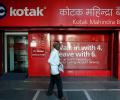
Kotak Mahindra Bank on Saturday reported a 25 per cent growth in its March quarter net profit at Rs 5,302 crore, limited by a drop in the core income due to narrow interest margins. On a standalone basis, the city-headquartered lender's Q4 net profit grew 18 per cent to Rs 4,133 crore. The FY24 consolidated net profit grew 22 per cent to Rs 18,213 crore.

Fast moving consumer goods (FMCG) companies are expected to see muted topline growth, with uneven spread of the monsoon impacting demand. Rural demand recovery, too, remains elusive in the July-September quarter. Brokerages expect volumes to remain steady in the quarter on a sequential basis.

Overall, the domestic FMCG market bounced back to levels of 98 in June compared with 75 in May and 101 in March before the nationwide lockdown was announced. The pre-Covid March index for foods was 103, and for non-foods, it was 99.
Moody's Ratings on Thursday raised India's GDP growth forecast for FY24 to around 8 per cent from 6.6 per cent on the back of strong domestic consumption and capital expenditure. The estimate comes a day after RBI Governor Shaktikanta Das said the economic growth in the current financial year could be close to 8 per cent in view of the third quarter GDP data released by the government. The latest estimate of Moody's is about 140 basis points higher than the earlier projection of 6.6 per cent made in November 2023.

Improvement in financial savings channelised massive inflows into the equities market through the mutual fund route.
From almost 60 per cent as of December 2019, the share of liquidations in the mode of closure of total Insolvency and Bankruptcy Code (IBC) cases came down to 44 per cent till September 2023, data by the Insolvency and Bankruptcy Board of India (IBBI) shows. Experts say the decreasing trend in liquidations under the IBC in India can be largely attributed to the initial economic conditions of companies entering the Corporate Insolvency Resolution Process (CIRP). IBC experts also say the trend shows a certain stabilisation in IBC with the Code now rid of legacy bankruptcy issues.

Axis Bank was the top loser in the Sensex pack, skidding over 3 per cent, followed by IndusInd Bank, Titan, HDFC, ICICI Bank, ONGC and HDFC Bank. On the other hand, Reliance Industries, Sun Pharma, HUL, Bharti Airtel and TCS were among the gainers.
Global fund managers remain bullish on the Japanese stock markets, which is now their most preferred destination in the Asian region. Both Morgan Stanley and Jefferies in their recent reports, have cited their preference for the Land Of The Rising Sun, which is fast becoming the land of the rising equities, too.

These funds at times invest in companies going through corporate restructuring, such as mergers, demergers, or buybacks.

Trends in the global markets, trading activity of foreign investors and announcement of domestic macroeconomic data are the major factors that would drive investors' sentiment in a holiday-shortened week ahead, analysts said. Benchmark indices had a record-breaking rally in the past week driven by impressive GDP data. Equity markets would remain closed on Friday for Mahashivratri.

Information technology (IT) companies have been on the road to revival in the past one year. From being the worst-hit sector in 2022 with a loss of 26 per cent, the Nifty IT index closed 2023 with gains of 24 per cent. So far in 2024, the index is up around 7 per cent against the nearly flat Nifty 50 benchmark index. The IT index has been on a continuous decline in the last three sessions.
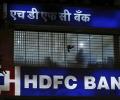
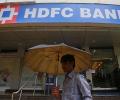
HDFC Bank's January-March quarter result, which came in-line with expectations, failed to enthuse investors. The reason? The management's decision to abstain from providing any specific growth guidance, and analysts' expectations of an arduous road to recovery. Analysts believe the path to normalisation of several growth metrics is unlikely to be a straightforward one, and the road to balance sheet realignment may be long.

Twin objectives of promoting recovery in the global economy and to put in place a set of reforms in the international financial system to help prevent future crises of this type taking place are crucial for G20, said a top US Treasury official. G20 is a group of 20 leading and emerging economies of the world representing more than 85 per cent of the global economy.

The index is currently trading at 149 per cent of its historical P/B valuation, surpassing its previous peak of 125 per cent made in 2020-21.

The hospitality industry has seen plenty of interest since the catastrophic impact of the pandemic, which led to losses in FY21. The hotel industry market cap has more than tripled since 2019 on the combination of a strong earnings rebound and positive surprises, as well as three recent listings. The industry has good tailwinds. The anticipation is, demand for rooms will outrun supply for a few years despite capacity expansions.

In an indication of easing financial stress among borrowers, the number of unsuccessful auto-debit requests through the National Automated Clearing House (NACH) platform declined in July, reversing a three-month trend that started with the second wave of the Covid-19 pandemic. According to the NACH data, of the 86.4-million transactions initiated in July, 33.23 per cent, or 28.7 million transactions, failed, while 57.7 million were successful. Compared to June, this is a significant improvement in bounce rates.

Operating margins have been the primary driver of corporate earnings in India in recent quarters, despite revenue growth suffering from weak consumer demand. Companies across sectors have reported a sharp improvement in earnings before interest, tax, depreciation, and amortisation (Ebitda) margins over the past two years, benefiting from lower commodity and energy prices. Higher margins more than compensated for slower revenue growth, resulting in double-digit growth in net profit for five consecutive quarters.

The new excise policy, introduced in Delhi in November 2021, made sweeping changes to the city's liquor trade.

After facing significant flight disruptions recently, Vistara CEO Vinod Kannan on Thursday told the airline staff that the "worst is behind us" and operations have already stabilised. Pilot woes have forced the Tata Group airline to temporarily cut down capacity by 10 per cent or 25-30 flights daily. While acknowledging that things should have been planned better, Kannan said it has been a "learning experience".

Scheduled commercial banks have written off loans amounting to over Rs 10.09 lakh crore in the last five financial years and the process of recovery of dues from the borrowers continues, Union Finance Minister Nirmala Sitharaman informed the Lok Sabha on Monday.

Tracking losses in the broader market that has seen the Nifty Smallcap 250 index and the Nifty Midcap 100 indices slip 9 per cent 6.1 per cent in the last three sessions, the frontline Nifty 50 index has remained resilient and registered a fall of 2.2 per cent during this period. Going ahead, can the nervousness in the mid- and small-cap universe spread to the large-cap peers? Most analysts do not think so. They expect a minor dip and a sharp recovery as investors flock to the large-caps in search of safety and value buying as the mid-and small-caps falter.

There is no impediment to normal operations as Tata Motors puts in place the demerger process of its commercial and passenger vehicles businesses. Instead, the demerger would provide greater manoeuvrability for both new entities to operate independently, according to Tata Motors management. While there may not be immediate value unlocking, it will give investors clarity about future growth and the financials across different segments.

The challenge for the RBI in 2024 is likely to be less about containing elevated inflation and more about curbing excessive financial market exuberance and a 'problem of plenty', notes Sajjid Chinoy, Chief India Economist JP Morgan.

'The private sector believes that some enablers in labour-intensive sectors like apparel, toys, tourism, and media retail, can unlock a lot of jobs.'

Although the third quarter of financial year (2023-2024) FY24 (Q3FY24) was marginally below expectations, Info Edge (India) is witnessing strong investment trends and hitting new highs. The big driver is optimism about a pickup in the jobs market, which benefits Naukri.com and could mean upgrades in Q4FY24 expectations. The JobSpeak Index, which Naukri.com releases on a monthly basis, is showing a "transformative shift".

After disappointing guidances in the first quarter (Apr-Jun) of the 2023-24 financial year (Q1FY24) and valuation downgrades, the Indian IT sector could see some positive repricing as the bad news for IT maybe easing in Q2FY24. A key negative factor was weaker demand from the US financial sector and from North America in general. The latest GDP (gross domestic product) estimates and sector-specific news suggest that the demand situation may not be quite so bad with a gradual recovery in tech spending in Q2.

India's largest life insurer, Life Insurance Corporation of India (LIC) reported encouraging performance in the January-March quarter (Q4) of FY24. Total annual premium equivalent (APE) was at Rs 21,180 crore, up 10.7 per cent year-on-year (Y-o-Y), with group APE of Rs 3,890 crore, up 60 per cent Y-o-Y, though individual APE contracted 2.1 per cent Y-o-Y. The participatory book contracted 20.2 per cent Y-o-Y, but the non-par grew by 206 per cent to Rs 3,740 crore.
The Supreme Court on Thursday once again assailed the practice of banks employing musclemen for recovery of loans from the public. It dismissed an appeal by ICICI Bank in one of the cases in which it had apparently used force for debt recovery. The court recalled that the Reserve Bank of India, in a letter accompanying its April 24, 2008, Guidelines on Engagement of Recovery Agents had stated that it might consider imposing a ban on banks engaging recovery agents

Kuwaiti authorities have identified the bodies of 45 Indians and three Filipino nationals killed in the tragic fire incident in a building housing foreign workers in the Gulf Kingdom, a top official said on Thursday.

Equity benchmark indices Sensex and Nifty ended almost flat in highly volatile trade on Thursday amid the lack of any immediate trigger. The 30-share BSE Sensex dipped 5.43 points or 0.01 per cent to settle at 66,017.81. During the day, it hit a high of 66,235.24 and a low of 65,980.50.

The fast-moving consumer goods (FMCG) sector has underperformed the Nifty over the past year as its 20 per cent return is trumped by 29 per cent of the benchmark index. The FMCG index saw a 2.2 per cent drop in the last session, while the Nifty lost 1 per cent. FMCG is seen as a defensive segment. The demand for staples like personal care products, groceries and snacks tend to be stable. FMCG companies are consistent dividend-payers.
